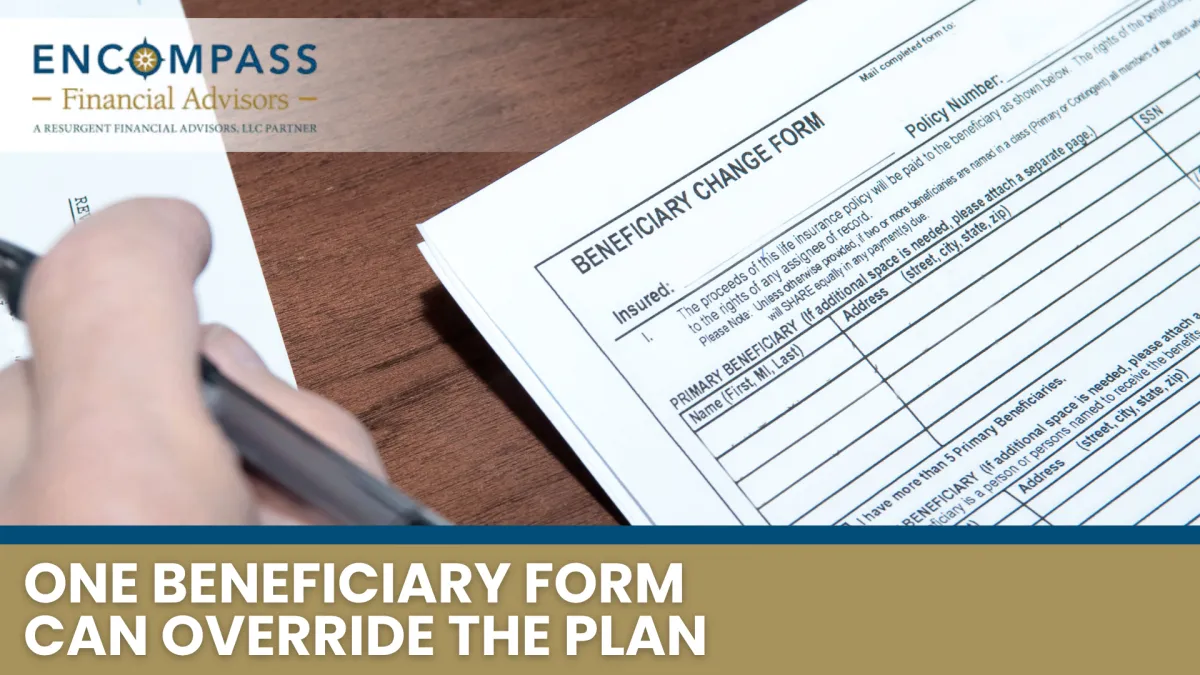
The Beneficiary Mistake That Can Override Your Estate Plan
By Mike Perros
Does A Beneficiary Override A Will?
In many cases, yes.
That surprises people every year. They’ve signed a will. They’ve updated legal documents. They’ve had the family conversations they knew they needed to have. They leave that process feeling like the plan is finished. Then an old beneficiary form quietly keeps doing its job in the background, even if it no longer reflects what the account owner actually wanted.
That’s what makes this issue so frustrating. It usually isn’t dramatic. It’s administrative. A form was completed years ago. Life changed. Intentions changed. The paperwork didn’t.
FINRA states that beneficiary designations on accounts such as many retirement accounts and brokerage accounts with transfer-on-death features typically override instructions in a will. FINRA also notes that these designations can remain valid through major life changes unless they’re updated.
That means a person can do careful estate planning and still have a serious gap if the beneficiary forms haven’t been reviewed alongside the legal documents.
What Happens If A Beneficiary Is Outdated?
An outdated beneficiary can send money somewhere it was never meant to go.
A former spouse may still be named on an IRA. An old life insurance policy may still point to someone from a very different chapter of life. A child may never have been added. A deceased individual may still be listed as primary beneficiary with no contingent beneficiary named behind them. None of those errors usually feels urgent while life is moving quickly. After death, though, they can create confusion, hurt feelings, and outcomes the account owner likely never intended.
That’s part of why this mistake is so common. It usually doesn’t come from carelessness. It comes from ordinary life. Marriage, divorce, remarriage, births, deaths, career changes, and account rollovers all create moments when the plan should be updated. Those moments also happen to arrive when people are already juggling plenty.
Paperwork tends to lose every fight against daily life unless someone makes a point to bring it back to the front of the line.
Which Accounts Should You Check For Beneficiary Designations?
More accounts deserve review than many people expect.
Retirement accounts such as IRAs, 401(k)s, and other employer-sponsored plans should be reviewed. Brokerage accounts with transfer-on-death instructions deserve review too. Life insurance policies, annuities, and some bank accounts with payable-on-death designations also belong on the list.
IRS guidance explains that retirement plan benefits are generally paid to the designated beneficiary under the procedures established by the plan, and FINRA notes that brokerage account designations can control the transfer of assets at death.
That’s why a will, by itself, isn’t enough. Some assets pass according to the beneficiary form on file, not according to whatever the family assumes the broader estate plan says. Good estate planning requires coordination, not just documentation.
Can An Old Beneficiary Stay In Place After Divorce Or Remarriage?
Yes, and that’s one of the most painful ways this issue shows up.
A divorce may be final. A remarriage may have happened years ago. Children may have been born. Grandchildren may now be part of the picture. Still, if the beneficiary designation was never changed, the older name may still control the account.
FINRA specifically warns that beneficiary designations should be reviewed after major life changes and after account transfers to make sure they still reflect the account owner’s wishes.
There’s also a very human side to this. Families don’t experience these mistakes as minor clerical issues. They experience them as personal. An outdated form can feel like a final statement, even when it’s really just a sign that no one went back and updated the file.
That’s what makes this review so important. It’s not just administrative housekeeping. It’s part of making sure your intentions are actually the instructions.
Do Retirement Accounts Have Special Beneficiary Rules?
They often do.
Retirement accounts can carry plan-specific rules, and spousal rights may matter more than many people realize. IRS guidance says that many employer plans require the spouse to be the primary beneficiary unless the spouse gives written consent to name someone else. IRS guidance also notes that plan terms can affect how benefits are paid after death.
That means retirement plan beneficiary planning isn’t always as simple as filling in a blank line and moving on. A participant may need to understand whether spousal consent is required, what distribution options may exist, and how the plan’s rules interact with the family’s broader estate and tax planning goals.
A short form can carry very long consequences. That’s especially true with retirement assets.
What Is A Contingent Beneficiary, And Why Does It Matter?
A contingent beneficiary is the backup beneficiary who receives the asset if the primary beneficiary can’t or doesn’t inherit it.
That might sound like a small detail, but it matters more than many people expect. A primary beneficiary may die first. A beneficiary may disclaim the asset. Circumstances may change in ways the original account owner never anticipated. A missing contingent beneficiary can leave unnecessary uncertainty behind.
FINRA’s investor guidance highlights the importance of naming contingent beneficiaries so there’s a clear next step if the primary beneficiary isn’t able to receive the account.
This is one of those details that seems easy to skip when everything feels fine. Trouble is, beneficiary planning is most valuable when it accounts for the possibility that life won’t unfold in a neat, orderly way. Life rarely shows that kind of restraint.
Can A Beneficiary Be Changed After Death?
No.
FINRA notes that once the account holder dies, the beneficiary designations go into effect and can no longer be changed.
That point matters a great deal. During life, a beneficiary form may feel like a minor administrative detail. After death, it can become final very quickly. Families may wish something were different. Advisors and attorneys may understand what the decedent likely intended. Loved ones may all agree the result seems wrong. Still, if the designation on file controls the asset, there may be very little room to fix the outcome after the fact.
That’s why this isn’t something to leave to memory or assumption. Hope is not a review process. Good intentions are not updated paperwork.
Why Do Beneficiary Mistakes Create So Much Family Stress?
Money and grief are already heavy enough on their own. Mixed together, they can become much harder to carry.
A current spouse may assume certain accounts were intended for them. Adult children may believe the estate plan was designed to divide assets a certain way. A charitable intention may have been discussed openly for years. Then one outdated beneficiary form changes the result. What looked like a family understanding suddenly collides with the paperwork.
That can create resentment, confusion, and tension at a time when people are already emotionally worn down. In many cases, the hurt goes beyond the dollars involved. Family members often interpret these outcomes personally, even when the mistake was simply old paperwork left untouched for too long.
That’s why this topic deserves empathy. Most people don’t avoid beneficiary reviews because they don’t care. They avoid them because life is full, the task feels uncomfortable, and there’s always something easier to do first. Financial planning often asks people to deal with things they’d rather postpone. This is one of those things.
How Often Should Beneficiary Designations Be Reviewed?
More often than most people review them now.
A practical habit is to review beneficiary forms at least once a year and after any major life event. Marriage, divorce, remarriage, birth or adoption, the death of a loved one, retirement, a large change in wealth, or a transfer of accounts to a new institution should all trigger a closer look.
FINRA says regular review is essential, particularly after major life changes.
This doesn’t need to become a stressful ritual. A simple annual review can go a long way. Confirm the primary beneficiary. Confirm the contingent beneficiary. Make sure percentages are correct. Make sure the designations still match the broader estate plan. Small maintenance can prevent a very large misunderstanding later.
How Do You Fix Beneficiary Mistakes Before They Become Bigger Problems?
Start with an inventory and compare every designation to the estate plan you believe is in place.
Gather retirement accounts, brokerage accounts, annuities, life insurance policies, and bank accounts with transfer-on-death or payable-on-death instructions. Review the exact designation on file for each one. Not what you think is probably listed. Not what someone remembers filling out ten years ago. The exact designation.
Next, compare those forms to the will, trust documents, family goals, and any charitable intentions. FINRA encourages investors to coordinate beneficiary choices with their broader estate and financial planning goals, and IRS guidance makes clear that retirement plan procedures and terms affect how benefits are paid.
This is also where professional coordination matters. Attorney, tax professional, and financial advisor should not be operating from different maps. A coordinated review can help make sure the estate documents, account titling, and beneficiary instructions all point in the same direction.
That kind of alignment is often where good planning quietly proves its value.
What Peace Of Mind Comes From Getting This Right?
A beneficiary review won’t solve every estate planning issue. It can, however, prevent one of the most avoidable and painful ones.
When beneficiary forms are current and coordinated, assets are more likely to move according to present-day intentions rather than old assumptions. Loved ones are less likely to be blindsided. The legal plan and the account paperwork are more likely to support each other instead of competing with each other.
That’s really the heart of it. Estate planning isn’t finished just because the binder is signed. It’s finished when the details behind the binder have been reviewed too.
A beneficiary update may feel small. In practice, it can be one of the clearest ways to protect your wishes, reduce family confusion, and make sure an old form doesn’t get the last word.
